 |
| No. 24 / 25.11.26 |
 |
 |
| A note from Team Futurelab / 4-minute read |
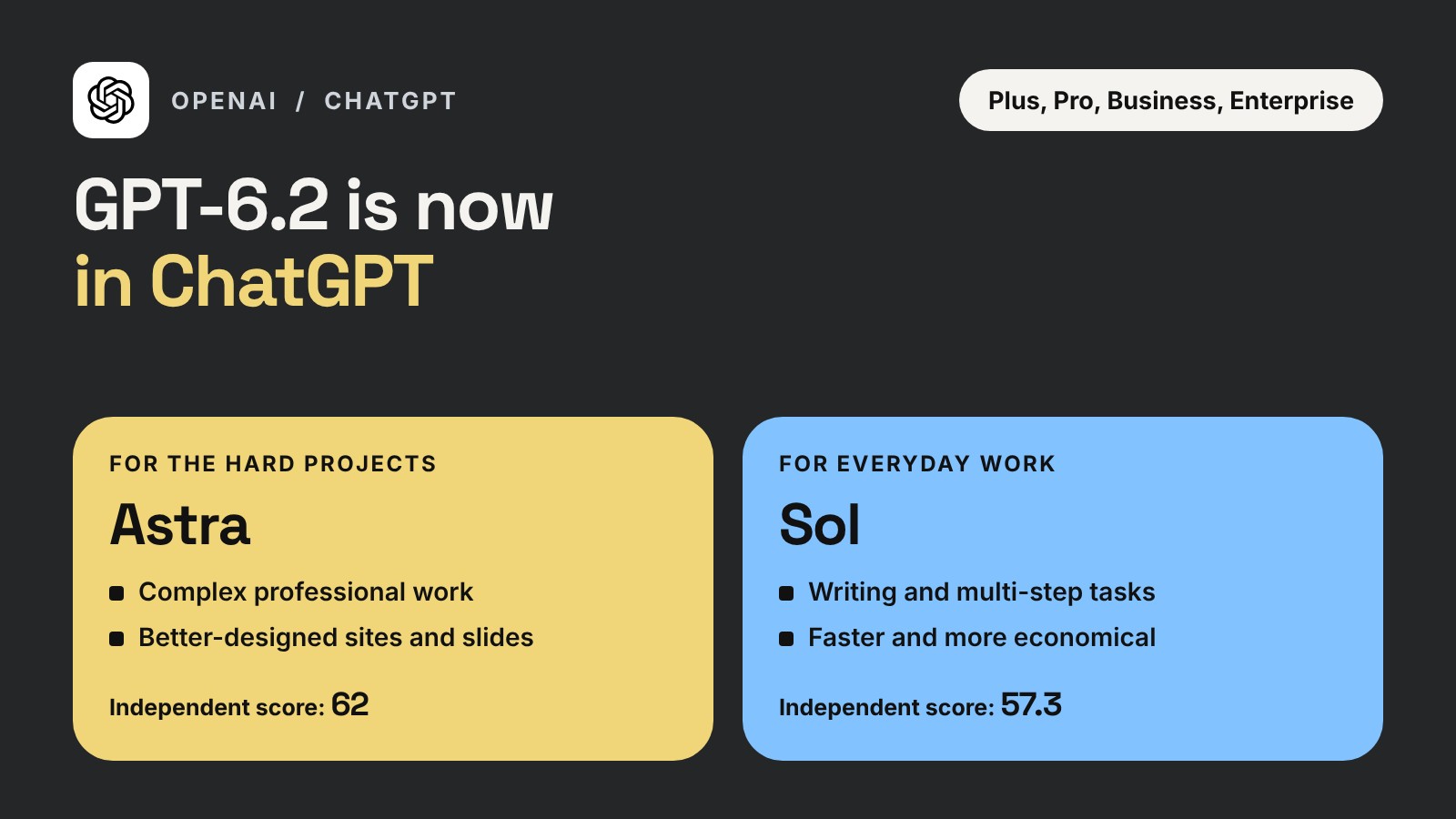 |
 Most work weeks have two kinds of tasks. The big, hard ones, like a pricing model or a detailed proposal. And the everyday ones, like emails, summaries and quick drafts. OpenAI’s newest models are built for exactly that split, and this week they arrived in regular ChatGPT. GPT-6.2 Astra is OpenAI’s most capable model, for complex professional work. GPT-6.2 Sol is the faster, more economical model for everyday writing and multi-step tasks. |
Astra for the hard projects OpenAI says Astra designs better websites and presentations, catches problems other models miss and finds unusual solutions. Independent testers at Artificial Analysis scored it 62, OpenAI’s highest yet and second only to Claude Fable 5.2. |
Sol for everyday work Sol scored 57.3 on the same index, and OpenAI positions it as the quicker, cheaper choice for writing and multi-step tasks. |
It costs less to build with For companies building their own tools, Astra costs 20% less than GPT-6 Astra, and Sol’s price stays the same. |
Early reviews have been mixed. Some experienced testers found the models hard to steer and said they stopped long tasks too early, while others praised their design work. OpenAI says it made big changes just before launch and is still improving ease of use. So try both on one real piece of work before you switch over. Who gets it: ChatGPT Plus, Pro, Business and Enterprise users, rolling out globally in regular ChatGPT since 23 November. Developers can use it through OpenAI’s API. It is not on the Free or Go plans. |
 |
1An Anthropic mathematician and Claude claim a proof of a 167-year-old maths problem |
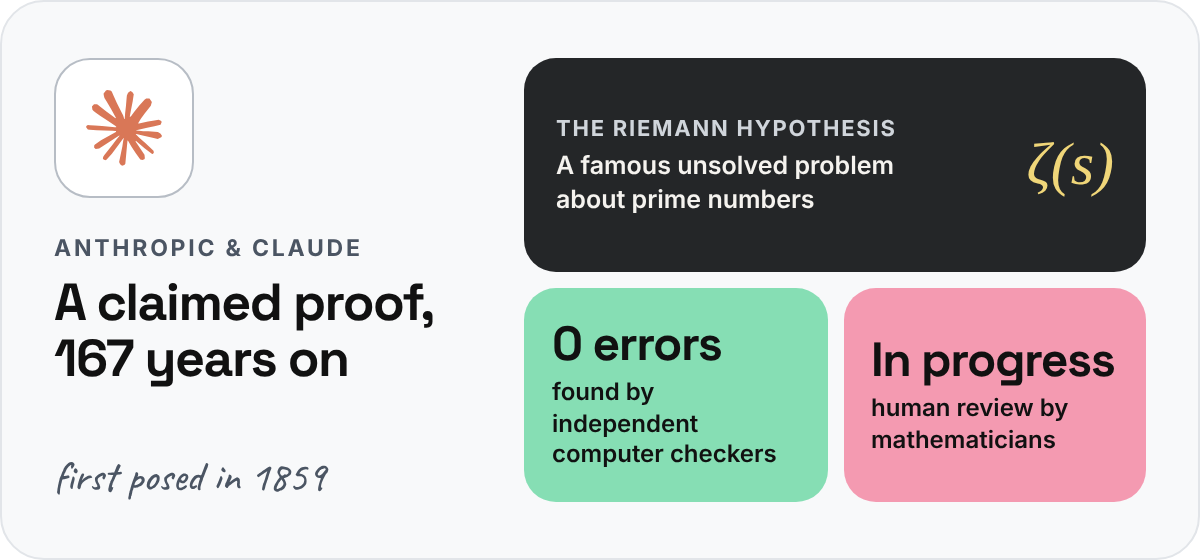 |
Levent Alpöge, a mathematician at Anthropic, has published what he says is a proof of the Riemann Hypothesis, a famous unsolved problem about prime numbers first posed in 1859. He planned the overall approach, and Claude worked through much of the detailed maths over several months. The proof is written as computer-checkable code, and several independent checkers found no errors. Mathematicians still need to read and understand it, and it has not yet been peer reviewed. If it holds, it will be one of the clearest examples yet of a person and AI solving a very hard problem together. Who should care: anyone curious about where human expertise and AI meet. |
2ChatGPT now types as you speak, with no time limit |
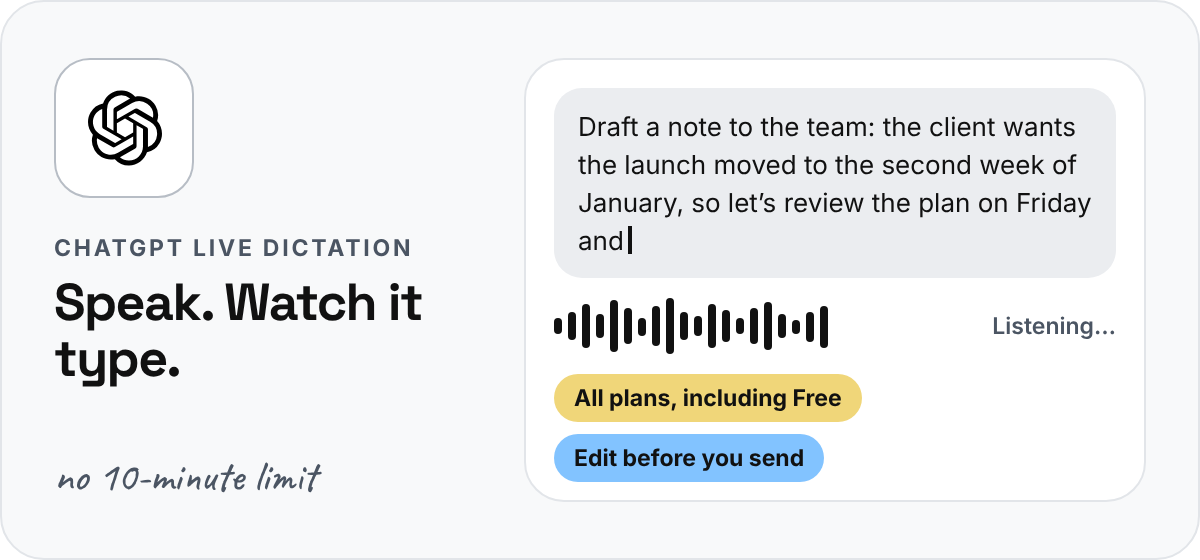 |
ChatGPT’s new Live Dictation turns your speech into text as you talk, so you can watch the words appear and fix them before you send. OpenAI has also removed the old 10-minute limit on recordings. It is handy for long briefs, meeting notes or a first draft you would rather say than type. Tap the microphone in the message box, not the voice-mode button, and start speaking. Who gets it: every ChatGPT plan, including Free, on iOS, Android, web and desktop. It is rolling out gradually. |
3Bajaj Finserv backs Soket AI, the Bengaluru team behind EKA-1 |
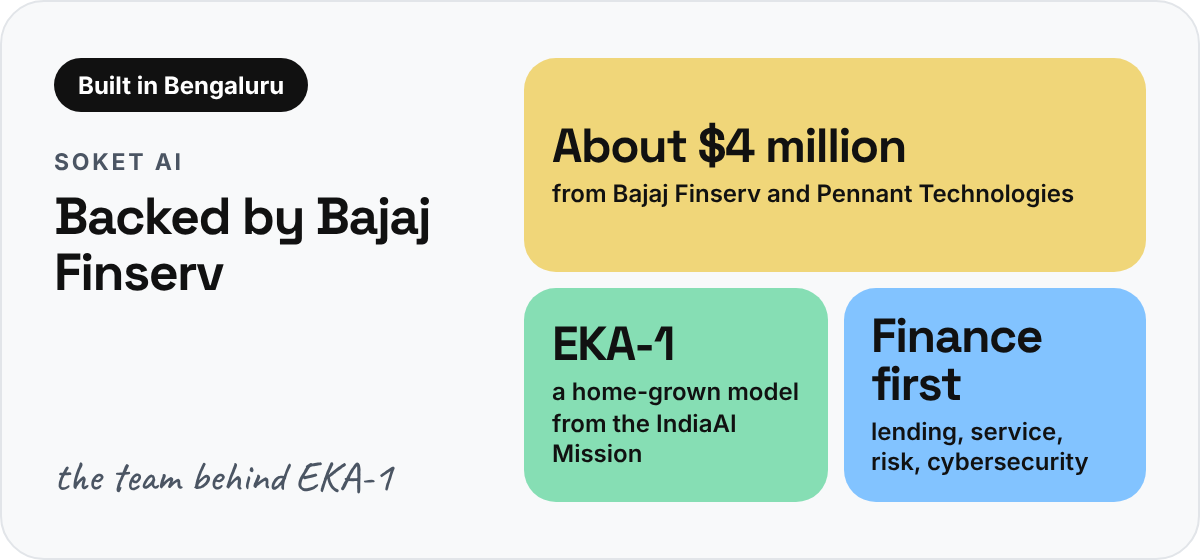 |
Soket AI has raised about $4 million from Bajaj Finserv and Pennant Technologies. Soket builds EKA-1, one of the three home-grown AI models released by the IndiaAI Mission earlier this month. Rajeev Jain of Bajaj Finance said Soket’s models “can make advanced AI economically viable for financial services,” and that they can run securely on the company’s own systems. Who should care: anyone following India’s own AI models, especially in banking and finance. |
Until next Wednesday, |
 |
P.S. Know someone who still builds every report by hand? Forward them this note. |
|
| |
 |
 |
| Something to try before Friday. |
 |
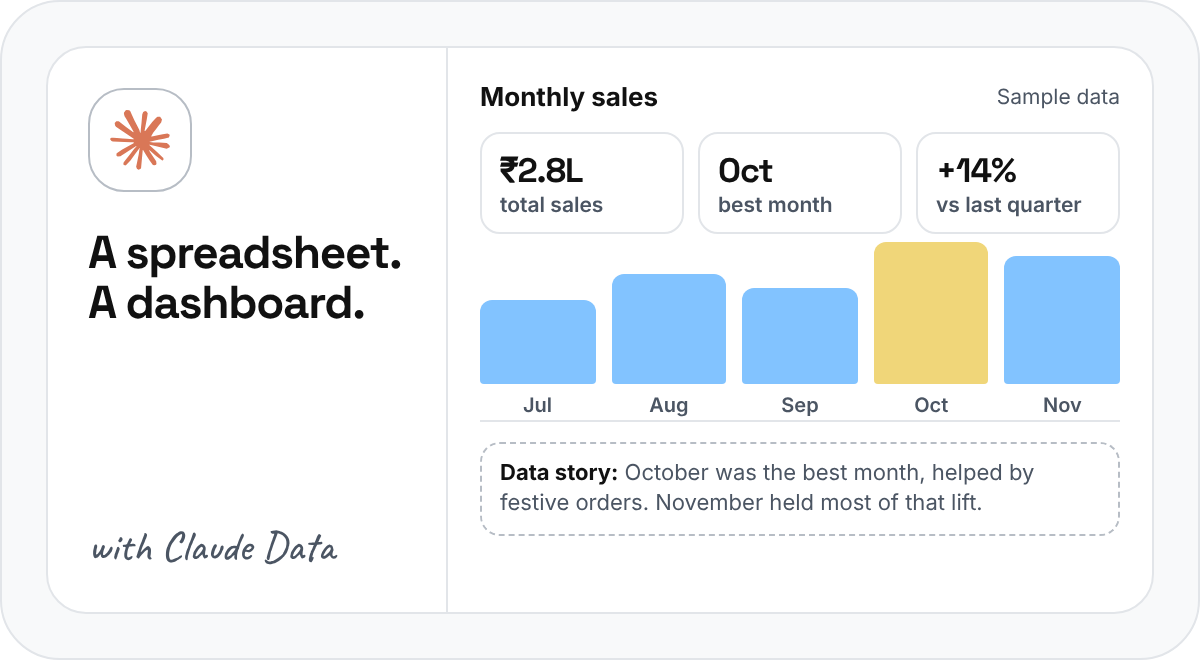
Turn a spreadsheet into a dashboard with Claude Data. It takes about 10 minutes. Claude builds an interactive dashboard from your numbers, then writes a short story about what they show. |
 |
1 |
Open Claude in a desktop browser on a paid plan. Tidy your spreadsheet into one clear table and save it as a CSV file. |
|
2 |
Go to Artifacts, choose Data and add your file. If you don’t see that option, attach the file in any chat instead. |
|
3 |
Paste the prompt below. Claude builds the dashboard from your numbers. |
|
4 |
Click any chart to see how its number was worked out. Edit titles yourself or ask Claude for changes, and use version history to undo. |
|
5 |
Ask Claude to turn it into a short data story, then check every figure against your file before you share it. |
|
Copy this prompt Build a dashboard from this file showing monthly sales, the best and worst months, and the top 3 products. Then write a 5-line summary of what changed and why it might matter. Use only numbers from the file, and list anything you could not calculate. |
|
| Tip: a dashboard made from a file does not update when your spreadsheet changes, and anyone you share it with can see all its data. Remove private columns before you share. |
|
| |
 |
5,000+ professionals
Founders, business leaders and practitioners working through the AI shift together, one conversation at a time.
|
|
Sources: OpenAI, OpenAI release notes via Releasebot, Android Authority, VentureBeat, TestingCatalog, Euronews, CASRAI, 9to5Mac, Notebookcheck, YourStory, Inc42 and Claude Help Center.
Futurelab Signal / Issue 24 / 25 November 2026 |
|